Choosing a DTF line: what to check on the shaker?
The video of 23 November 2024 looks at choosing a DTF line for printing on film, focusing on the shaker, the unit that applies adhesive powder and cures it. It shows a running machine and the changes in the new version. Click a time to play the video from that point. The video is in Russian.
Questions and answers by the minute
0:34 Can you add printheads to a DTF printer later?
The video discusses machines designed for four printheads, the parts that apply ink to the film, which can start with two. The suggested upgrades are adding a head for fluorescent inks, which glow under ultraviolet light, or moving to two heads for colour inks and two for white ink for higher speed.
2:21 How does automatic powder return work in a DTF shaker?
The powder circulates back into the feed, so there is no need to remove a container and pour it back manually. In the automatic mode shown, heating starts without film, while the powder feed waits for the film to arrive.
3:06 Why does the shaker have plastic powder feed screws?
The video explains that the mechanism heats up when feeding adhesive quickly, which is why plastic is used. According to the presenter, plastic feed screws pass less heat to the powder, so it does not melt during feeding.
4:25 Why does a DTF shaker need a vacuum?
The vacuum uses suction to hold the cut end of the film against the moving belt. This lets the last print pass through curing without pulling extra metres of film through the whole line.
4:56 Why preheat the print before applying DTF powder?
A heated table warms the ink before the adhesive powder is applied, giving it time to set slightly. The video explains that this keeps the powder from passing through the ink and causing spots.
6:38 Why does a DTF printer have extra ink tanks?
The video describes nine ink tanks on a printer with a print width of 60 cm. White and the main colours use five, leaving four spare; the suggestion is to use these for fluorescent inks with an additional head.
7:08 What should you check on a DTF printer for easy maintenance?
The presenter draws attention to access to the printer's pumps. On the machine shown, they are within easy reach and come off their mounts without undoing screws, which the presenter considers helpful for maintenance.
8:31 What changed in the new version of the DTF shaker?
The cover was shortened so that an operator standing at the machine can see the last print coming out and catch it before it falls to the floor. The video also shows a guide for even winding and a separate cover that makes it easy to watch the film being loaded.
9:41 Where does condensation go in the DTF shaker shown?
There is a drain inside: condensation, the liquid droplets that form from vapour, runs down and leaves through a tube. The same segment shows seven heating lamps, a temperature sensor and a rubberised closing surface on the new version of the shaker.
Where should you start when choosing a DTF line?
Consider the printer and shaker together. For a photo studio or print shop producing designs on T-shirts and other textiles, it helps to assess the print's entire journey, from printing to leaving the curing unit. This is the kind of work the review focuses on.
If you plan to add printheads, ask to see how the shaker handles the chosen configuration. The video discusses curing capacity alongside the number of heads, rather than separately from the printer.
What should you ask to see before buying?
This is our checklist, based on the video.
- Check how the control panel responds to a normal press: how easy is it to use without repeated attempts?
- Follow the path of the powder and the last print. Assess where the operator needs to intervene and whether they can clearly see the film coming out.
- Ask the engineer to show access to the parts that need maintenance and where condensation drains away.
- Discuss line setup and ongoing technical support: who will answer questions after start-up?
For comparison, watch the video of 17 February 2024 (in Russian), which shows a shaker with button controls. Compare how easy the individual panels are to use by watching them in operation.
How does the review relate to the catalogue?
The lines listed below are similar machines, not a confirmed match for the model in the video. The ST-602 and ST-604 product pages include 60 cm versions with two and four heads. Check the options for adding heads later and the shaker design for your chosen configuration: the description of the machine in the review does not replace its product information.
Equipment in the catalogue
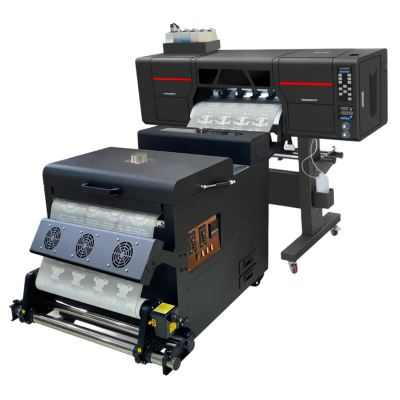 DTF line 60 cm ST-602, 2*i3200
- DTF line 60 cm ST-602, 4×i3200
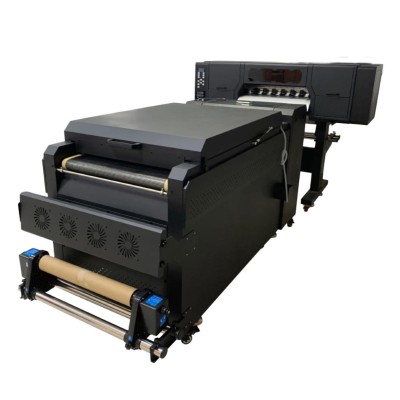 DTF line 60 cm ST-604, 2×i3200
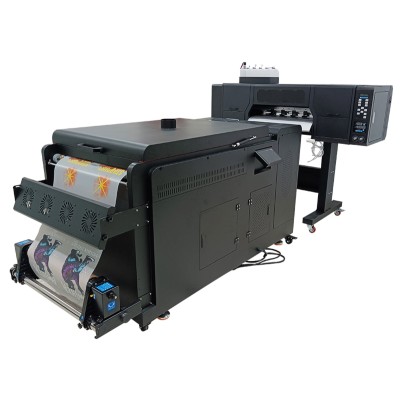 DTF line 60 cm ST-604, 4×i3200, automatic powder return