How are Santos printers made?
In this video dated 20 April 2026, PrintChina shows how Santos printers are made, from prepared metal parts to testing assembled machines. The interview also covers how overseas partners are chosen. Click a time to play the video from that point. The video is in Russian.
Questions and answers by the minute
0:52 How is Santos printer assembly organised?
The video shows 60 cm and 30 cm printers being assembled. The machines are built in batches: bodies of a particular colour arrive at the small workshop, and the team finishes that batch before moving on to the next.
4:10 How are Santos printers tested after assembly?
The video mentions test printing and shows a machine being checked without printheads, the units that apply ink to the material. It is run for several hours to check for errors and overheating, and to test the table heating and vacuum suction, which holds the material in place.
5:17 Are metal parts made in the Santos workshop?
Metal is not cut in the small workshop shown: the parts arrive already prepared. Printers are assembled on site, so this part of production is shown specifically as an assembly operation.
6:03 What is the Santos hybrid printer?
The hybrid UV printer combines printing on a flat table with printing on material fed from a roll. UV means that the ink hardens under ultraviolet light. In the interview, it is called the UV All-in-One Printer and described as a development that opened up a new direction for the company.
9:21 How does Santos choose its official representatives?
The interview lists requirements for overseas partners: their own team of technical specialists, attention to customers' interests and experience with printing equipment. These are the manufacturer's stated criteria for selecting dealers.
12:12 Which printers did Santos start making first?
The first category was eco-solvent printers, machines that use solvent-based inks. In the interview, this choice is explained by previous experience making these machines and familiarity with the assembly process.
14:41 How does the factory check that the carriage moves evenly?
The carriage is the moving unit that holds the printheads. The video shows its movement being checked with dial gauges: these measuring instruments reveal deviations and help align the surfaces.
15:14 Can you order a Santos printer to suit your requirements?
The manufacturer's representative says machines can be built to individual customer requirements. This section does not list specific modifications, terms or limitations for such orders.
What should you ask about printer testing before buying?
Use the tour as a starting point for discussing a particular machine. Ask the seller to show you a test print and explain which mechanical checks your chosen printer has passed. This keeps the discussion focused on the equipment you are buying.
This is our own list, based on the video.
- Check whether the machine was tested for errors and overheating.
- Ask how the carriage was checked for even movement.
- Ask to see a test print made after assembly.
What should you ask a Santos representative?
Start with technical support: who will handle questions about your printer, and what experience does that team have? The manufacturer's requirements for dealers can serve as questions to ask the seller before choosing a configuration.
If you need a machine for a particular task, describe the changes you want in advance. Then check which of them the manufacturer is prepared to make for your order: a general statement about custom manufacturing is not enough to base your choice on.
How can you compare the machines in the video with the catalogue?
First, write down the print width and number of printheads you need, then compare the product pages. Keep body colour as a separate preference: in the tour, it is linked to the order in which batches are assembled.
The machines below are similar models. According to the product pages, the mini line has a print width of 30 cm and two heads; the ST-602 has a print width of 60 cm, with two-head and four-head versions available. A 160 cm eco-solvent printer is included for comparison. We do not claim an exact match between these models and the machines shown in the workshop.
Equipment in the catalogue
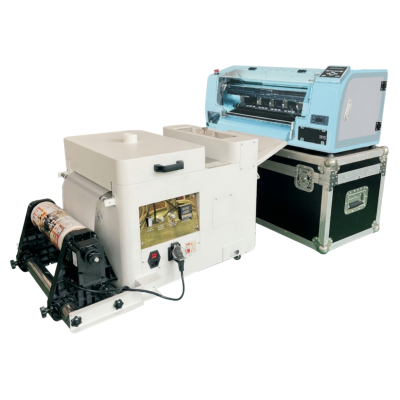 DTF line 30 cm mini, 2 heads
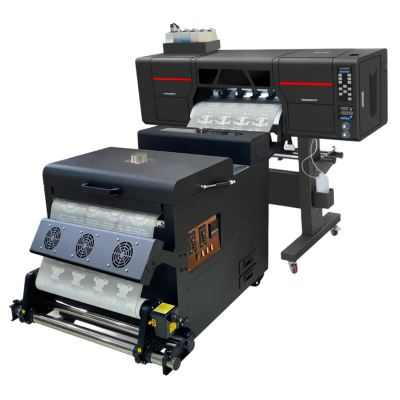 DTF line 60 cm ST-602, 2*i3200
- DTF line 60 cm ST-602, 4×i3200
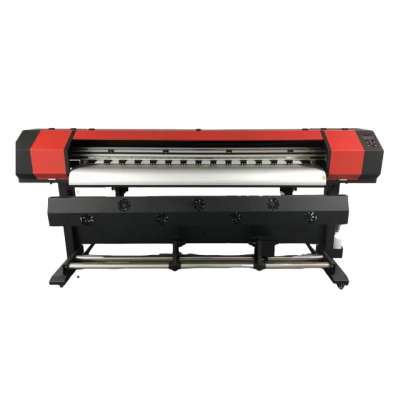 Eco-solvent printer 160 cm, 2×i3200