DTF and UV-DTF start-up in Yekaterinburg: what to check?
In the video of 13 September 2024, the PrintChina team starts up a DTF line for printing on film followed by adhesive powder application, and a UV-DTF printer for printing on film with a varnish coating, in Yekaterinburg. The team also shows a heat press, a press that applies heat, and embroidery machines. We look at how the equipment is built and the adjustments needed after delivery. Click a time to play the video from that point. The video is in Russian.
Questions and answers by the minute
4:14 How is the compressor arranged for the UV-DTF printer's laminator?
The laminator, the unit that joins the films, has a separate compressor standing on the floor. Its mechanism uses pistons. The presenter points out that this arrangement makes the compressor easy to replace.
5:43 What should you check on a UV-DTF printer for easy maintenance?
The pumps are at the front, with access for maintenance. The panel shows the laminator's pressure and temperature. You can adjust the vacuum strength, which controls how firmly the film is held against the table.
6:55 In what order does the UV-DTF printer print white, colour and varnish?
The UV-DTF printer started up in the video has three i3200 printheads. It prints the white layer first, then CMYK, the main colours that make up the image. Varnish covers the image on top.
8:15 Which embroidery machines were supplied with the printers?
The video shows a machine with two heads and 15 needles per head, and a machine with one head. It also shows embroidery on a baseball cap. Special attachments are used for this, and the presenter says they are included.
10:29 Why does the presenter recommend a large heat press table?
The heat press supplied in the video has two tables measuring 50 × 60 cm each. A small item fits on a large table. According to the presenter, a large item is awkward to position on a small table.
12:34 Can you add heads to the DTF line after buying it?
The line shown has two printheads installed, but it is designed to hold four. The video suggests adding a white head and a colour head to increase printing speed. The ink lines, the tubes that supply ink, are already in place.
13:31 Is the DTF line's built-in shaker filter enough?
The shaker, the unit that applies and cures adhesive powder, has a filtration unit. The presenter considers it sufficient for small production volumes but recommends venting outdoors for larger volumes. The filter has a container that collects condensation.
14:40 Can you feed separate DTF prints into the shaker?
The video describes feeding in a cut piece of film with prints on it. A vacuum holds it on the shaker's conveyor belt. This avoids feeding extra film through just for a few images.
17:03 What needed fixing on the UV-DTF printer after delivery?
After transport, the engineers straightened the guide chain carrying the tubes and wires. They then adjusted head cleaning, the height of the caps, the covers under the heads, and the position of the wiper, the rubber blade that cleans them. They also adjusted the colour profile, which controls colour reproduction.
Who can learn from this equipment upgrade?
Anyone already printing on a small DTF line and considering the next step. At this business, the old machine could no longer keep up as production volumes grew. So it is worth looking beyond the new line's first print to the jobs it will be able to handle later.
When talking to the supplier, it helps to separate two questions: what is installed now, and what is in place for expansion. The option to add heads to the machine shown does not mean every line in the catalogue is built that way.
What should you discuss before choosing the equipment?
Our checklist, based on the video.
- Production growth. Ask which parts are already prepared for expansion and which will need to be bought separately.
- Your products. Discuss the size of the press table using examples of future orders, including large items.
- Daily maintenance. Ask to see how to access the pumps, check pressure and collect condensation. This is a separate part of getting to know the machine.
How should commissioning finish?
Commissioning means preparing and adjusting equipment before production printing. In the video, it is split into start-up with tests, followed by operator training. This is a useful order for the owner when accepting the equipment: first see the results of the setup, then go through operation with the employee who will be printing.
Discuss colour reproduction separately. The presenter talks about building a colour profile with a measuring instrument and a specialist. Demonstrating that the machinery works and checking colour should therefore be treated as separate parts of the equipment handover.
Below is a selection of similar machines from the catalogue. An exact model match with the equipment in this start-up has not been confirmed; check the product page for the specifications of your chosen configuration.
Equipment in the catalogue
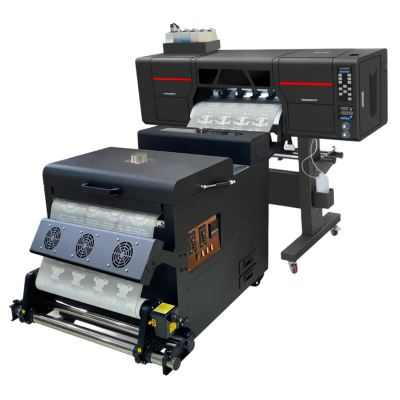 DTF line 60 cm ST-602, 2*i3200
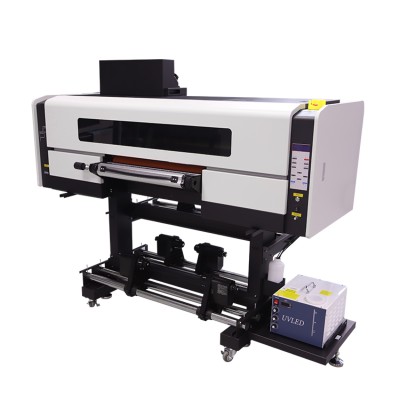 UV DTF printer 60 cm IUV2060-3, 3×i3200
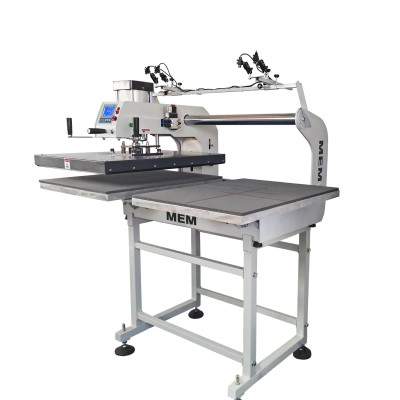 MEM TQ-5060 pneumatic heat press, 2 tables 50×60 cm
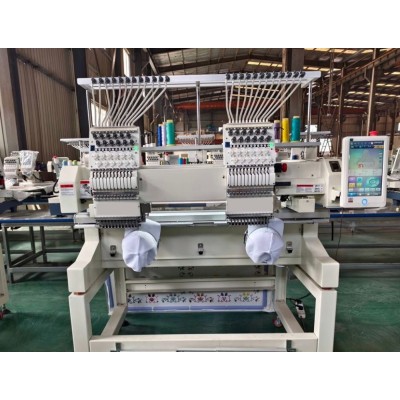 Two-head embroidery machine, 40×50 cm field, 15 needles