How can you modify the ink lines on a Santos DTF printer?
The video dated 18 January 2024 shows a modification to a Santos printer for DTF, a process that prints an image onto film for transfer to fabric. Extra filters are added to the ink lines, the tubes that supply ink. The focus is on filter placement and tube connections. Click a time to play the video from that point. The video is in Russian.
Questions and answers by the minute
0:22 Why add filters for each colour on the Santos DTF printer?
In the video, extra filters are fitted at the customer's request. The existing tube layout is kept: separate filters are used instead of adding adapters and combining channels.
1:17 Which white ink tubes are left without extra filters?
The engineer points out the white ink supply and recirculation tubes, which keep ink moving in a loop. No extra filters are fitted to these tubes, but a loose connection on the recirculation tube is tightened.
1:41 Why can't you shorten every tube by the same amount?
In the video, the filter is held in position first: it takes up space previously occupied by part of the tube, and the tube must not kink. Progressively shorter sections are cut from the following tubes; otherwise, the ink lines would be pulled tight and would need to be repaired.
2:13 Where are the extra filters placed in the Santos?
The engineer checks the layout: four filters fit in a row, with room for two more on the right. The upper cover over the ink tanks, the containers that hold the ink, is removed to reach the tank ends of the tubes.
3:13 Why fit the filters one tube at a time?
The engineer works on one tube at a time to avoid mixing up the connections if the ink lines are twisted. For each filter, the excess tube length is measured separately to avoid leaving any kinks.
3:52 What is checked when reconnecting a tube to the tank?
The presenter warns that a tube end may no longer seal properly after removal, so it is trimmed. A special clamp then secures the connection; the lengths of the following tubes are assessed separately.
4:28 Why does fitting ink filters take time?
The presenter describes the job as labour-intensive: the tubes are very tight to push on, and the work left their fingers sore. After checking the filter positions, they mention that the filters could be secured with cable ties.
Who will find this Santos modification breakdown useful?
A printer owner who wants to discuss extra filters with a service engineer and understand exactly what will be changed. The starting point here is a request to fit a filter for each colour. When discussing the work, it helps to separate two questions: which channels the modification affects and how the new parts will fit inside the casing.
In the video, the rear cover and the cover over the ink tanks are removed. Do not attempt this dismantling or work on the tubes yourself; contact a service engineer. The timecodes help you show the engineer a specific part of the work.
What should you discuss with the engineer before the modification?
This is our checklist, based on the video.
- The connection layout. Which tubes will get filters, which will keep their existing arrangement, and will any connections need changing?
- Space inside the casing. Where will the new parts go, and how will the tubes run once they are fitted?
- The length of each tube. How will the engineer allow for the filter position to avoid both kinks and tension?
- The fit of the connections. Where have loose connections already been found, and how will the reconnected tubes be secured?
This way, the discussion covers the whole job, from choosing the layout to the connections after reassembly. Look beyond the number of filters: the video also examines their positions and the condition of the tubes.
What can you compare in the catalogue?
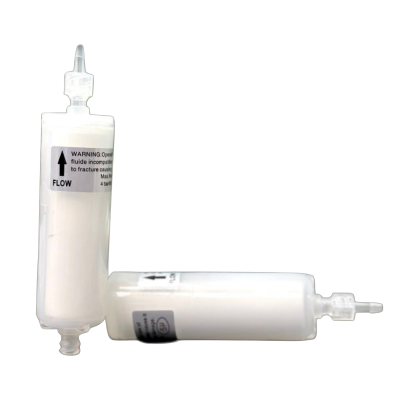
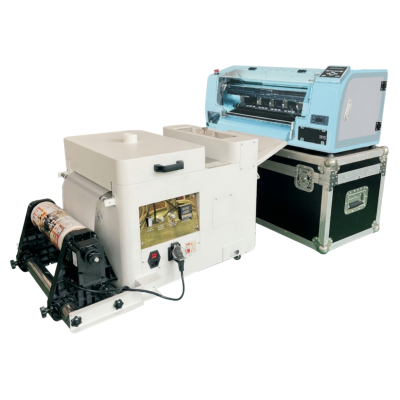
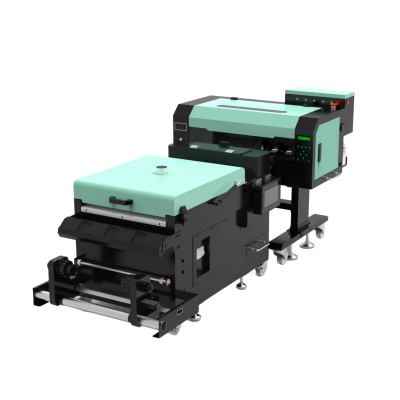
The selection includes a 5-micron DTF ink filter. Microns are units used to measure very small sizes. For a filter, this rating describes how fine the filtration is. Similar DTF lines are also included: the mini with a 30 cm print width and the T200 + SD400 with a 33 cm print width. These lines are not identified as the Santos shown in the video. The 5-micron value comes from the filter's product listing; there is no basis for applying it to the parts shown in the video.