DTF printer details: what to check before buying?
The video covers starting up a DTF printer for printing on film, from ease of maintenance to applying adhesive powder. The review helps you assess the design and understand what causes print defects. Click a time to play the video from that point. The video is in Russian.
Questions and answers by the minute
3:37 Is a compact DTF printer easy to maintain?
The carriage, the unit that holds the printheads, has a compact design. The video points out the downside: installing the heads and priming them with ink is less convenient.
6:02 What connection limitation was found during start-up?
During this start-up, connection through a network switch, a device that links equipment on a network, did not work. The team switched to a direct connection and checked for possible signal loss along a long cable. The video does not give a confirmed cause.
9:39 Why does the adhesive powder tray have raised sides?
The sides hold the adhesive powder in and stop large amounts spilling over the edges. The video also praises the tray height and roll position: you do not have to crouch to remove them.
12:32 Why does ink spread on DTF film?
The film's primer is a coating that holds ink drops in place. But if the ink limit, the amount of ink applied, is set too high, the coating may not be able to hold it.
13:17 Why do gaps appear right through a DTF print?
If the ink is still liquid, adhesive powder can pass right through the print. The video links this to insufficient heating or too much ink.
14:13 Why won't adhesive powder stick to the print?
The adhesive sticks to wet areas of the print but not to dry ones. The shaker, a device that applies powder and shakes off the excess, removes adhesive that has not stuck firmly.
18:21 Why do bands appear in solid areas of colour?
The video says that just two or three nozzles not firing blue ink can cause bands in a solid area of colour. Nozzles are the tiny holes in a printhead through which ink is delivered.
18:54 How is the strip protected from accidental contact?
On the machine shown, the strip is covered by a metal plate. The presenter explains that this prevents someone accidentally touching the strip with a hand during maintenance.
19:17 How are the DTF printer's internal connections protected?
The internal connections are tucked away at the back, with access restricted. They are enclosed in a corrugated protective sleeve to prevent chafing and contact with plastic.
Are small design details worth considering when choosing a printer?
When comparing configurations, the presenter notes that the printhead and control board may remain the same. So it is worth discussing the machine's design and ease of everyday use separately with the seller.
The presenter sees the benefit of built-in improvements as saving owners from having to devise and finish them themselves. This approach to choosing a printer suits anyone who wants to understand in advance what the manufacturer has already provided.
What should you ask to see before buying?
This is our list, based on the video. These are questions for an equipment demonstration: check which of the features shown are included in your chosen configuration.
- Ink monitoring. The review shows LED indicators and an alarm for each ink tank, as well as an alarm for the waste ink tank.
- Handling white ink. The presenter mentions a stirrer and recirculation, which keeps ink moving in a loop. Ask to see these components.
- Roll support. In the video, reinforcements on the holder distribute the load and prevent sagging. A separate tray under the guide stops the roll unwinding on its own.
What should you check at handover after start-up?
Discuss completion of the assembly: at the stage shown, the roll holders, cooling system and holders for the finished print roll had not yet been installed. This is a reason to agree in advance on what must be assembled by the end of start-up.
Also ask to see how the printheads are performing. After start-up, the team reported that all nozzles on the colour and white heads were working again. Discuss the actual test result with the engineer at handover.
Below are similar DTF lines and supplies from the catalogue. An exact match between the model in the video and the product listings has not been established; the design features shown cannot automatically be attributed to these products.
Equipment in the catalogue
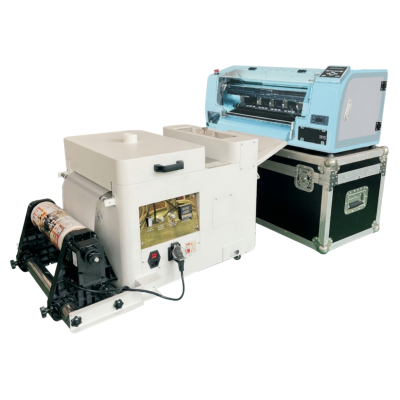 DTF line 30 cm mini, 2 heads
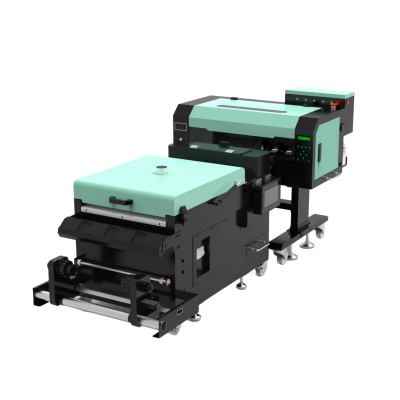 DTF line 33 cm T200 + SD400, 2×i1600
 DTF film 75 µm, 100 m roll
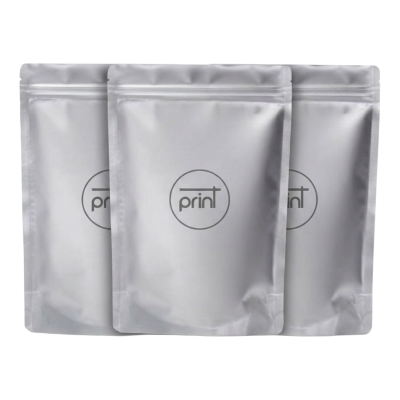 DTF powder (hot-melt adhesive), 1 kg