Choosing a Chinese printer: where to go after DTF?
This video from 15 November 2025 discusses how to grow a printing business and assess Chinese equipment. The presenters explore a photo shop's experience, printing on clothing and the difficulties of running printers after purchase. Click a time to play the video from that point. The video is in Russian.
Questions and answers by the minute
4:54 Why is it difficult for a photo shop to rely only on retail customers?
A printing business needs a steady flow of work, but someone who orders photos may not return for a long time. The discussion describes expanding into T-shirt and souvenir printing and working with wholesale customers.
13:11 What kinds of clothing orders is DTF suitable for?
DTF means printing an image on film for later transfer onto an item. The video gives everyday examples: adding names to children's clothing, adding a design or covering a stain with an image.
14:36 Can you sell DTF transfers separately from clothing?
Yes, the video describes selling ready-made prints as images for transfer. A print business can produce the images without making the finished printed clothing.
16:02 What does a DTF line include, and why does it need a shaker?
The line includes a printer and a shaker with a dryer, a device that coats the image with powder and cures it with heat. The printer prints on film, and the powder sticks to the image while it is still wet.
31:13 How does DTF differ from UV-DTF?
This section discusses DTF for textiles and leather. UV-DTF is described as a way to make stickers for hard surfaces: metal, glass, plastic, wood and acrylic.
32:54 Can DTG completely replace DTF?
DTG means printing directly on fabric, and the discussion looks at its use for T-shirts. DTF lets you apply designs in awkward places, such as the shoulder of a jacket, and on backpacks. A padded jacket is difficult to position for direct printing on the shoulder.
33:40 Which feels less noticeable on fabric: DTF or DTG?
According to the presenter, a large DTF design feels like film even with soft adhesive and flexible inks. With DTG, the fabric is coated with primer, a preparation liquid, and printed on directly. The video says that this kind of print can feel almost unnoticeable.
35:11 What do you need to buy for DTG besides the printer?
The video explains that a printer alone is not enough for direct printing on fabric. You also need a drying machine and a machine for applying primer, the liquid used to prepare the fabric.
44:12 Why did the printer leave a smear on the T-shirt?
During the demonstration, the T-shirt was not smoothed out properly, and the printer caught the fabric while printing. The smear ruined the item. The machine described had no height sensor to detect when the table needed lowering.
49:22 What should you look for in a showroom before buying a printer?
The video stresses that the machines should be running and actually printing. In the showroom described, the equipment is filled with ink and ready to demonstrate how it works.
52:57 Why does support after delivery matter when buying a printer?
The presenter sees servicing, advice and training as the main challenges. The work does not end with delivery: buyers need ongoing support as they use the equipment.
Where should you start when expanding a printing business?
The photo shop described bought equipment as orders came in: first one printer, then a second. This experience can guide a discussion about your next purchase: what orders you already have and what work you plan to add.
With DTF, printing and applying the image do not have to happen at the same time. The video specifically notes that a finished print can be transferred onto an item later. This is worth considering when organising your order workflow.
What should you check before choosing your next printer?
Our checklist, based on the video.
- Staff training. Who will learn the new technology? The discussion about running a large number of machines specifically highlights the need to train people.
- Ink supply at startup. Ask the engineer to check it: in the case described, black ink came through instead of white, even though the labels were correct.
- Waste ink drainage. One cleaning unit had a collection container, but a drain tube was added only after someone pointed out the problem.
- Support arrangements. Check which help is official support and which consists of specialists answering voluntarily. In the chat described, help was not covered by contracts or obligations.
Which new finishing options could you discuss with your supplier?
The podcast mentions adding real silver or gold foil to stickers. Another example is a raised image that imitates thread for an embroidery effect. These options could be part of a discussion about new services.
Below is a selection of machines for similar uses: a DTF line, a printer for direct printing on fabric and a printer for UV-DTF stickers. We do not claim an exact match with the equipment in the podcast.
Equipment in the catalogue
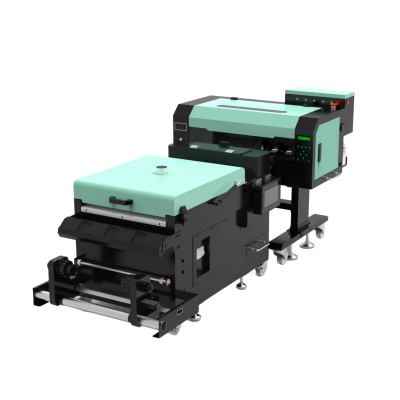 DTF line 33 cm T200 + SD400, 2×i1600
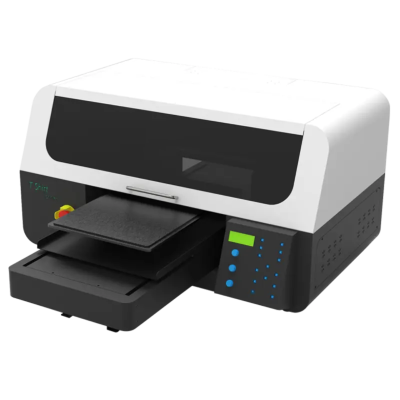 DTG printer ST-400G, 40×60 cm platen, 2 printheads
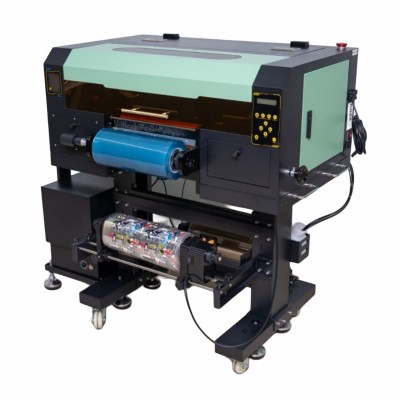 UV DTF printer 30 cm TF230, 2×i1600