UV-DTF with foil and no glue head
UV-DTF means printing artwork on film for transfer to an object. The video of 10 May 2026 shows a machine after six months of use: it applies foil without a separate printhead for glue. Click a time to play the video from that point. The video is in Russian.
Questions and answers by the minute
0:54 How does it differ from an ordinary UV-DTF?
It has film C to remove the sticky layer, a blade that presses the artwork to keep it in place, and an oil roller. The roller prevents artwork from sticking to the shaft if any elements do transfer to film C.
1:50 What had to be adjusted?
The carriage, the moving assembly that holds the printheads, was not set correctly at the factory. In the video, its height was adjusted using the washer and screws provided.
2:20 Can you start such a machine yourself?
Without experience it is not advised: pressure, temperature, time and materials all matter. Otherwise the gold finish may be uneven or part of the print may transfer to the film.
3:21 Why is it simpler without a glue head?
There is no need to mix components and pour glue into a separate printhead. There is also no glue printhead requiring separate attention.
3:50 What else does it have?
There are filters for each ink colour, tubes for draining the ink tanks, an ink-level alarm and a device that stirs the white ink. The ultraviolet lamps are water-cooled.
4:46 Can it print without foil?
Yes: blue film is used for ordinary printing without foil. The video also shows foil being applied selectively to individual elements.
5:43 Why the oil roller?
It prevents the artwork from sticking to the shaft if it transfers to film C. The roller is oiled and absorbs the oil.
6:44 What is the blade for?
It presses elements so that they do not transfer to film C. Too much pressure tears the film, while too little has no effect.
8:04 What matters for protection?
In the video, flat cables are protected with moisture-proof tape to keep ink off them. According to the presenter, UV ink eats away at the plastic covering, leaving the wires exposed.
8:58 Is small text visible?
With correct pressure, yes: stars and small letters were preserved in the video. When the blade was raised, the small elements were lost.
9:28 Does it stick to paper?
Yes, in the video the transfer was applied to a kraft paper bag and the paper stayed intact. Film A is bent slightly to separate film B carrying the artwork.
11:03 Why is the machine expensive?
It arrives fully assembled, so shipping costs more. The authors chose it because they do not need foil every day.
Who is it for?
- You need foil transfers, but not every day.
- You need to transfer artwork to paper: the video demonstrates this on a kraft paper bag.
- Someone can look after the blade and film settings.
What do films A, B and C do?
You print on film A, film B carries the artwork to the object, and film C removes the sticky layer. Materials strongly affect the result. Material selection and setup require a specialist with experience of these machines.
Machine and films
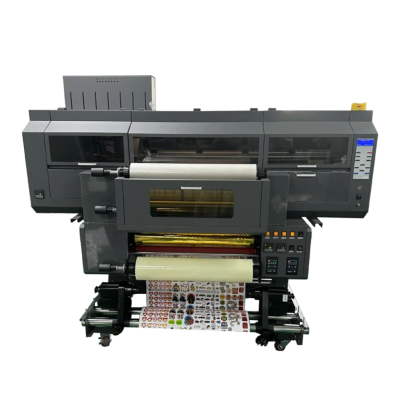 UV DTF printer 60 cm HY-600T, 4×i3200, with automatic foiling
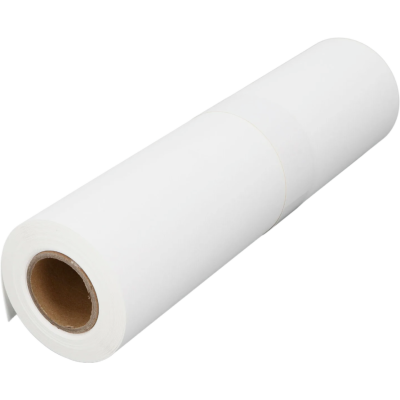 UV DTF film A for foiling, 60 cm, 100 m
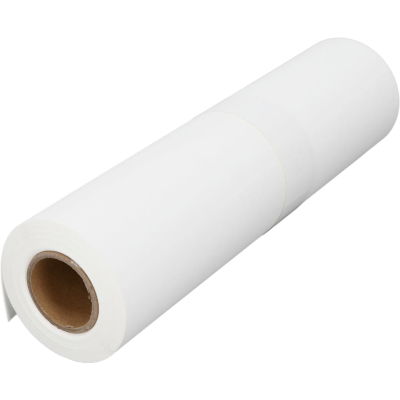 UV DTF film B for foiling, 60 cm, 200 m
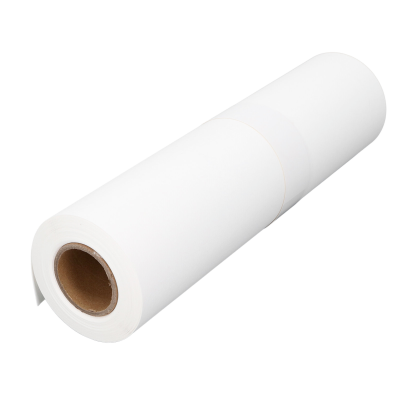 UV DTF film C for removing the sticky layer, 60 cm, 200 m
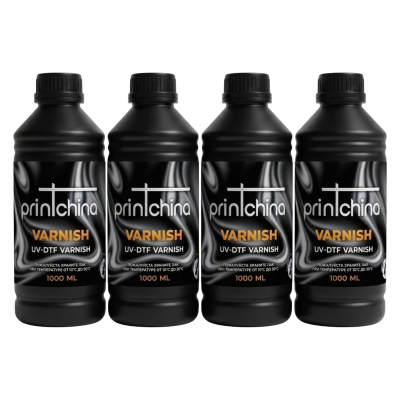 UV-DTF varnish (Varnish)