Raised stickers on a roll UV printer
Raised stickers can be printed directly onto a roll of vinyl film. The video dated 26 December 2025 compares UV – ultraviolet printing on this material – with UV-DTF, which transfers an image from a special film onto an object. Click a time to play the video from that point. The video is in Russian.
Questions and answers by the minute
0:34 How is relief made on a roll?
Several layers of white ink are printed, with seven white ink passes in the video. It takes time, but the lines become raised.
1:27 Which machine is needed?
The video suggests a roll UV printer with at least two printheads – the components that apply ink. One is dedicated to white ink. A white layer beneath the colour image allows printing on silver, gold and black material.
2:12 Which ink and firmware are needed?
The presenter mentions special inks described as non-rigid, and special firmware – the printer’s internal software for this type of printing. Printing is done on ordinary vinyl film: white, clear or coloured.
3:16 How are stickers cut out?
With a cutting plotter – a machine that cuts around the sticker outlines. It uses printed marks to locate the cuts. Its width is matched to the print width.
3:42 How does it differ from UV-DTF?
In the video dated 26 December 2025, the vinyl sticker is removed in one piece, while UV-DTF is described as coming off in pieces. Printing on vinyl is described there as five times cheaper than UV-DTF.
4:35 Can it be applied to paper?
Yes, a vinyl sticker is applied together with the film on which the image is printed. With ordinary UV-DTF transfer, removing the transfer film – the temporary film used to transfer the image – may tear the paper.
5:29 Is there UV-DTF for paper?
The video shows a machine that uses an additional film to remove the sticky layer. The presenter says this allows the image to be transferred onto paper and cardboard.
6:22 How are different heights made?
A different machine demonstrates a special firmware setup. The software treats printheads filled with white ink as heads for white, varnish and foil, although they all print white. Separate areas are defined in the artwork – the image file prepared for printing – for these layers to produce different relief heights.
8:33 What else simplifies production?
No lamination film – an additional covering for the print – is needed. Small details are already printed on the vinyl, so they do not need to be transferred separately onto the object. The stickers are cut out after printing.
10:00 What does the result look like?
The finished sticker has a clearly visible raised texture. The video also suggests adding a third printhead for varnish – an additional coating for the image.
UV-DTF or vinyl?
- In the video, the vinyl sticker is removed without a trace from the demonstrated surface. Making these stickers requires a printer and a cutting plotter.
- Consider whether film around the image is acceptable: it stays on the object with a vinyl sticker, while the transfer film is removed with UV-DTF.
What to look at when ordering?
Discuss the configuration for the relief you need: the number of printheads, a head dedicated to white ink and special firmware. Choose a cutter that can accommodate the width of the material loaded after printing.
Printers and cutter
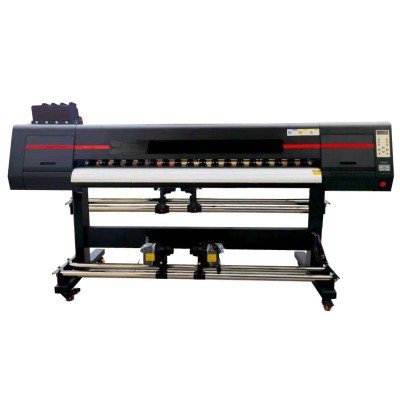 Roll-to-roll UV printer 160 cm 1602UV, 2×i3200
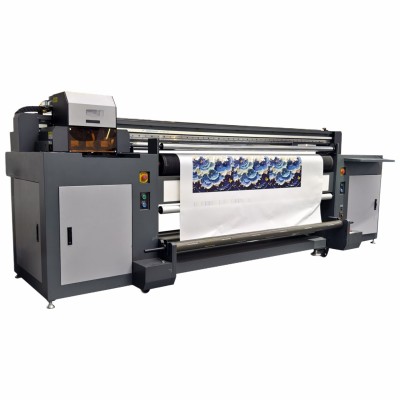 Roll-to-roll UV printer 180 cm M1800W-4, 4×i3200, hybrid
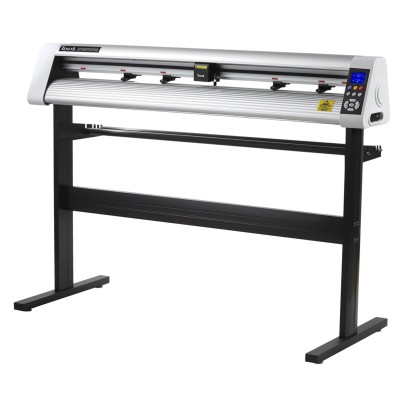 Cutting plotter 160 cm T59AX
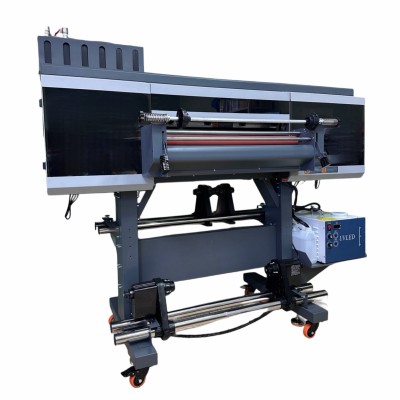 UV DTF printer 60 cm for textiles, 3×i3200