UV, UV-DTF or DTF: what to choose in 2026
The PrintChina team films running machines and samples at APPPEXPO 2026 in Shanghai: hybrid UV printers, UV-DTF, DTF lines and bottle printing. The video was published on 11 April 2026. Click a time to play it from that point. The video is in Russian.
Questions and answers by the minute
0:34 What changed in the new "3 in 1" hybrid?
A hybrid prints both on objects and on sticker film. This is the third version of the machine: touch panels were replaced with ordinary buttons and water cooling with air cooling; the carriage (the moving unit with the heads) got heating and head adjustment screws, and the beam and rails were reinforced. The table can now be adjusted in height and tilt. Small ink tanks are named as a drawback.
4:32 Can a hybrid print on bottles?
Yes, a rotary axis is connected instead of the table: it turns the bottle under the head. The video shows white plus colour on bottles, including a change in height. A slight shift is explained by the liquid inside the bottle, which makes it tremble; the advice is to print on empty bottles. A sheet was put inside a glass bottle so that the glass would not reflect the lamp.
6:46 What is good about a compact DTF line with a vertical shaker?
The shaker coats the film with adhesive powder and heats it. A vertical one takes less space and saves film: the printer stands on a base and the print goes straight under the lamps. There is a built-in filter, but venting outdoors is still advised. The printer now has controls for how fast white ink circulates through the system and how fast it is stirred.
8:43 Which heat press is shown?
It is pneumatic: compressed air from a compressor provides the pressing force. It has two 40×60 cm tables on a wheeled stand. In manual mode it closes at the press of a button; in automatic mode it closes when the table reaches the position sensor. Keep the other hand away from under the press in either mode; the video warns about this during the button-operated demonstration. The screen shows time and a product counter. The compressor is bought separately.
12:50 Why would you need a six-head DTF line?
In the video of 11 April 2026 two heads of this line print white, two print CMYK and two print the extra RGBO colours (red, green, blue, orange). The shaker signals when powder runs out and stops when the lid is opened.
15:44 How does a hybrid find an object on the table?
A scanner captures the table and the software shows where the blanks lie, so the artwork is placed on them. A height sensor sets the carriage level. This machine combines printing on a 60×90 table, on bottles with a rotary axis and UV-DTF from a roll.
18:40 How does UV-DTF with foil and adhesive removal outside the image work?
In regular UV-DTF, adhesive covers the whole of film A, the film used for printing. Here a separate laminator, which joins films together, allows adhesive outside the image to be removed. Adhesive remains under the image itself. So the film peels off easily: in the video a sticker was transferred to a sheet of paper, the paper did not tear and the image stayed in place. Gold or silver foil sticks to a special varnish.
21:20 What are the difficulties of such a machine?
It is demanding about materials: you need a special foil varnish, its own films and matched temperatures, otherwise the image will not come off film A, the one it is printed on. If you do not need foil, the roll is set along a shorter path for regular UV-DTF. At the time of filming the machine was in the showroom.
29:12 Why a DTF printer with a single i3200-HD head?
One head holds four white and four colour channels, so there is no need to align heads with each other, and the detail is higher. The video of 11 April 2026 gives 2.8 m² per hour for such a printer. The line is compact: the printer stands on a cabinet with the shaker and filter below.
31:12 UV-DTF: 60 cm or 30 cm?
The head, board and principle are the same; the difference is the body width and shipping. The video recommends 60 cm: besides stickers it takes a roll of vinyl, canvas or poster paper and prints on it with UV.
33:53 How does a bottle printer work?
The video of 11 April 2026 mentions six Toshiba heads, fewer are possible. The machine tilts the bottle by itself and stores model settings: choose yesterday's model and the height and tilt are applied. Ink mist is collected by a built-in vacuum. When the video was filmed in April 2026 it was only going to be added to the catalogue.
36:03 What can the A3 hybrid with an i3200-HD head do?
It prints on the table, on a UV-DTF roll with lamination and on bottles with a rotary axis, all with one head. According to the video, the hybrid shown prints either white with colour or varnish on a bottle, but not all at once. The video also says this hybrid must not print directly on glass because reflected light can damage the printhead.
How do UV, UV-DTF and DTF differ?
- DTF prints on film, and the image is covered with adhesive powder. The result is a transfer for fabric, applied with a heat press.
- UV (flatbed) prints directly on the item: on the table or on a bottle with a rotary axis. It can add relief and varnish on hard objects.
- UV-DTF prints on film A, which is then covered with film B. The result is a sticker for plastic, metal, glass and wood.
- A hybrid prints on the table, on a UV-DTF roll and on bottles: one machine instead of two or three.
What to choose for clothing and textiles?
DTF. The video shows both compact lines and a large six-head one: the latter prints extra colours and reports when powder runs out. See the DTF printer catalogue; you will also need a heat press.
What to choose for souvenirs, bottles and hard objects?
A hybrid combines the table, the roll and the rotary axis in one machine. Bottles on a hybrid work well in batches: set up, lose a blank or two, then print the same thing. For a single order the setup takes long, as the video openly says (10:38–11:21). At the end of the video, the speaker also says of the A3 hybrid that printing directly on glass can damage the printhead.
What to choose for stickers and packaging?
UV-DTF. In the video of 11 April 2026, the presenter says the extra cost of 60 cm compared with 30 cm is small, while the wider machine offers more options. For packaging and paper, the video shows an option with foil and adhesive removal outside the image, but it needs precise setup and special materials. Suitable films are in supplies.
What should you check on a hybrid?
According to the presenter, water cooling caused trouble on the previous version of this hybrid and was replaced with air cooling; on other machines in the video it remains and is named an advantage. The video pays attention to these points:
- maintenance access to the caps (covers that seal the head when parked), the wiper (the rubber blade that cleans it) and the head;
- carriage heating and head adjustment screws;
- stiffness of the beam and rails, table adjustment;
- your doorway: some machines go through sideways, others, according to the video of 11 April 2026, need an opening of about 1.4 m.
How should you read the figures in the video?
Speeds and prices were shown at the exhibition in April 2026 and refer to the machines on the stand. Specifications, configuration and prices of the equipment we supply are on the product pages. If a machine from the video is not in the catalogue, ask us whether we can bring it.
Similar equipment in the catalogue
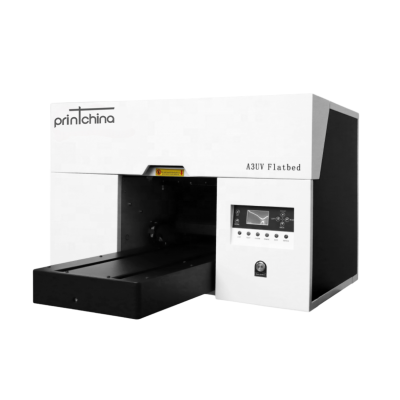 A3 UV printer (IUV-A3UV), i3200-HD, UV and UV DTF hybrid
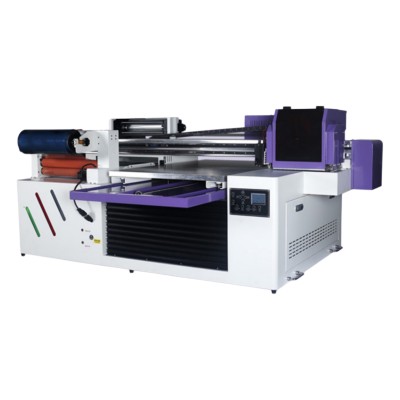 UV DTF printer ST-6090Plus, table 60×90 cm, roll 30 cm
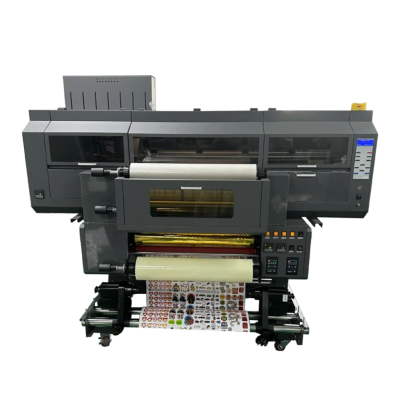 UV DTF printer 60 cm HY-600T, 4×i3200, with automatic foiling
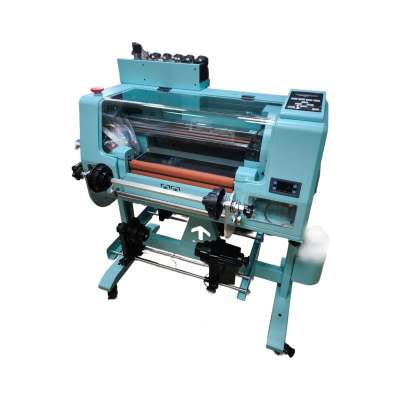 UV DTF printer 30 cm, i3200-HD
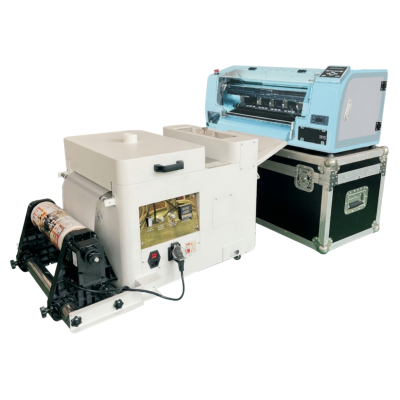 DTF line 30 cm mini, 2 heads
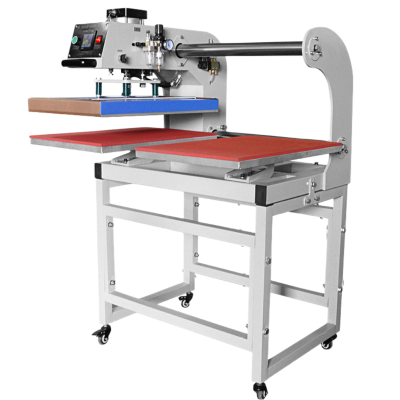 Pneumatic heat press 40×60 cm, 2 tables