Starting printers in St Petersburg: what to check?
In the video dated 4 July 2026, PrintChina shows printing equipment being started up in St Petersburg: assembly, checks of the components and staff using the machines after setup. They also discuss why one of the machines could not be started. Click a time to play the video from that point. The video is in Russian.
Questions and answers by the minute
0:39 What should printer training include?
The plan in the video is to spend a full day on training. Staff are encouraged to change rolls and print themselves under the engineer's supervision, so they can learn the work and get their questions answered.
1:45 What should you check after fitting the printer cover?
During assembly, the engineer checks for leaks and kinked tubes. In this case, parts of the cover pressed against the filters and pinched them, so the fit of the cover had to be corrected. Do not try this modification yourself; contact the service team.
4:20 Why does the DTF line's shaker have two trays?
The DTF line shown combines a printer and a shaker for working with film. The shaker is the unit that applies adhesive powder to the film and heats it. On the machine shown, an extra tray catches powder that spills from the first one. According to the presenter, this keeps powder off the floor.
4:52 How does the shaker collect condensation?
Condensation is liquid that builds up under the lid and in the vapour outlet. In the shaker shown, absorbent material holds it before it drains into a separate container. A slot lets you see the level; the collected liquid needs to be emptied.
6:39 Why does a DTF shaker need an extraction system?
The video recommends always using an extraction system to remove vapours from the shaker. The presenter links this to a smoother adhesive coating without an "orange peel" texture. This explains how this particular line works, rather than promising the same result with any settings.
7:13 What can be adjusted on the DTF printer shown?
The video shows a printer with a Hoson control board and two i3200 printheads. There are controls for white ink stirring and recirculation, which keeps the ink moving through the system. The vacuum that holds the film down is also adjustable, and the table has heating at the front and rear.
7:55 Why is there a mirror in the DTF printer's maintenance unit?
The mirror lets you see the printheads' reflection and check whether their parking area is clean. This version has more space around the unit. According to the engineer, it can be serviced without removing the mirror.
10:07 Why could the second printer not be started?
A short circuit occurred while starting the second machine. The engineer suspects that a ribbon cable, a flat connecting cable, had shifted, but says the exact cause is still unknown. The decision was to take the machine back and replace it with a different model; the replacement's start-up is not shown in this segment.
13:52 How long does staff training take?
In this case, a full day was planned, but the staff already had the knowledge they needed. Training therefore consisted of printing independently under supervision. The presenter also notes that they had already printed orders without the engineers present.
How should you assess a line before buying?
Look at how easy the whole line will be to use: feeding film, collecting excess powder, monitoring liquid in the container and servicing the printer. The closer look at the shaker in this video helps you prepare questions for an equipment demonstration before buying.
Ask specifically whether there is an automatic powder return system. At the start of the video, the engineer points out that the machine in the showroom has one, while the delivered shaker does not. Similar printers do not necessarily mean that the whole lines have the same equipment.
What should you check with the engineer at handover?
This is our list, based on the video. These are questions to check together, rather than instructions for taking the machine apart or repairing it.
- Ask to see a print sample and a nozzle test: nozzles are the holes through which ink comes out. At the end, the engineer assesses both the test and how the machine works from the start of printing to the finish.
- Ask where to check container levels and how to spot dirt in the maintenance unit.
- Check that a member of staff can handle the roll and a test print independently while the engineer is nearby.
- If the start-up is incomplete, record separately what already works and what still needs to be resolved.
How can this example help you choose equipment?
For a small print shop owner, the useful part is the order of assessment: machine design, ease of maintenance, trial operation and staff training. Invite the person who will do the printing to the training discussion: in this case, the team's experience made a substantial difference to the amount of training needed.
Below are similar machines from the catalogue. The ST-602 DTF line lists a Hoson board and i1600 / i3200 head options. The IUV2060-3 printer lists three i3200 heads. The ST-6090Plus lists a 60 × 90 cm table. These details help you compare product pages; the video does not confirm an exact match with the machines delivered.
Equipment in the catalogue
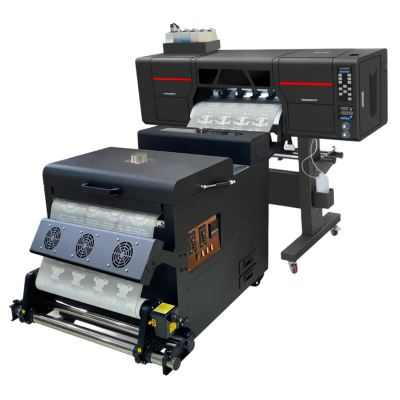 DTF line 60 cm ST-602, 2*i3200
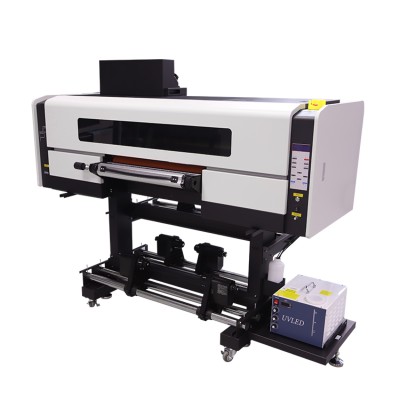 UV DTF printer 60 cm IUV2060-3, 3×i3200
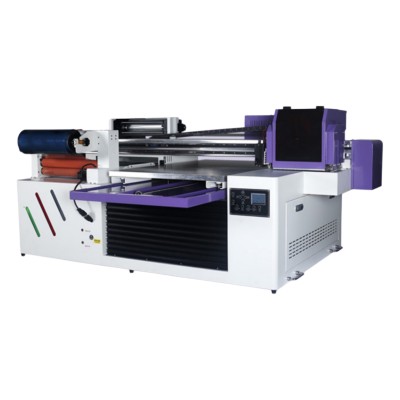 UV DTF printer ST-6090Plus, table 60×90 cm, roll 30 cm