UV-DTF on TPU film: high relief for textiles
UV-DTF means printing on film and then transferring the design; ultraviolet light cures the ink. Here, TPU film is used for raised stickers on fabric. The video of 10 May 2026 shows printing, cutting and transfer with a heat press, a device that presses the design onto fabric using heat. Click a time to play the video from that point. The video is in Russian.
Questions and answers by the minute
0:10 How does a roll-fed machine print such relief?
In the machine shown, the roll moves only forwards. To build high relief, they raised the carriage, the moving assembly that holds the printheads, and changed the signal controlling ink delivery from the heads. The video says a similar sample took 40 minutes to print at a show, compared with about 4 minutes here.
1:02 How are such stickers cut?
The video describes a flatbed cutter as convenient: suction holds the film against its table. The demonstration uses an ordinary roll-fed cutter that follows printed registration marks. The speaker advises leaving a white border around the design and gives an example of a 3–4 mm border.
2:21 Which machine is in the video?
The video describes a 60 cm machine with four i3200 printheads, 1500 W lamps and two tanks for white ink. Sliding panels provide access to the inside. The speaker finds one panel inconvenient because it has to be slid out to gain access.
4:07 Which inks does it use?
The video lists three ink types: ordinary UV-DTF, UV-DTF for textiles and inks for TPU film. It also mentions different firmware versions: built-in software that controls the printer.
5:25 How does cutting work?
The roll-fed cutter followed the registration marks and cut right along the edge of the design. The video recommends leaving a border of TPU film around the design to make cutting easier.
6:42 How does TPU differ from textile film?
On textile UV-DTF film, the design transfers without a border or cutting. On TPU, it is printed on a continuous base. According to the speaker in the video, TPU adheres more firmly than textile UV-DTF film.
8:00 Roll-fed or flatbed?
The video explains that a flatbed printer with a lowering table can build up the relief, but the film must be cut and positioned on the table. The roll-fed machine shown is described as faster: the required length is set and printing starts directly from the roll.
9:20 What does the sticker look like on fabric?
In the video, the sticker was transferred onto a bag with a heat press. The speaker compares its feel to a silicone sticker and shows that fine lines have also printed successfully.
10:12 Which textile technologies exist now?
The video names five technologies: DTF, transferring a design printed on film onto fabric; sublimation, transferring dye into a material using heat; DTG, printing directly onto fabric; UV-DTF for textiles; and UV-DTF on TPU film. These are presented as the main options for photo shops with limited space.
Three films: what is the difference?
- Ordinary UV-DTF is for hard objects.
- Textile UV-DTF gives an embroidery effect without cutting.
- TPU gives high relief on a base and needs cutting.
What is needed besides the printer?
TPU film and ink, a cutter with mark reading and a heat press. The cutter has its own guide. Ask a manager about film and ink availability.
Machines
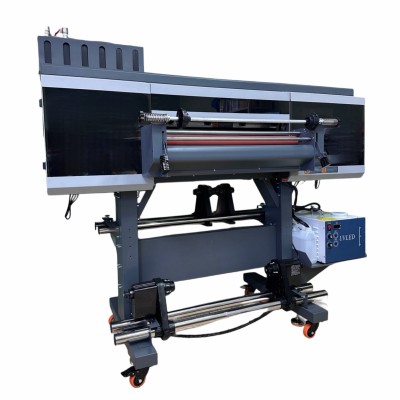 UV DTF printer 60 cm for textiles, 3×i3200
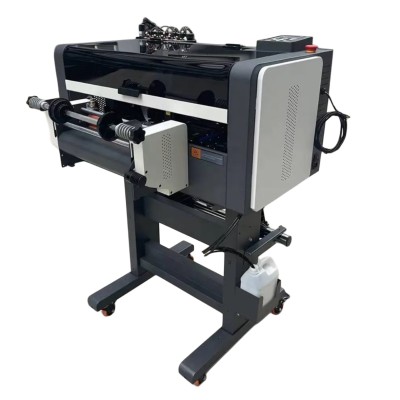 UV DTF printer 30 cm for textiles, 3×i3200
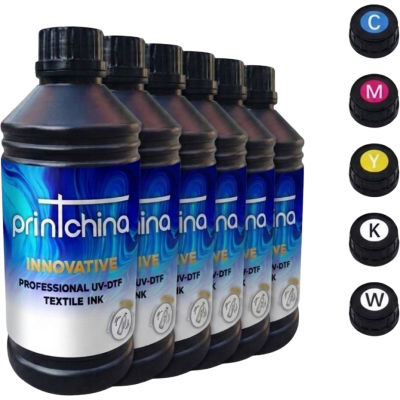 UV-DTF ink for textiles, 1 L
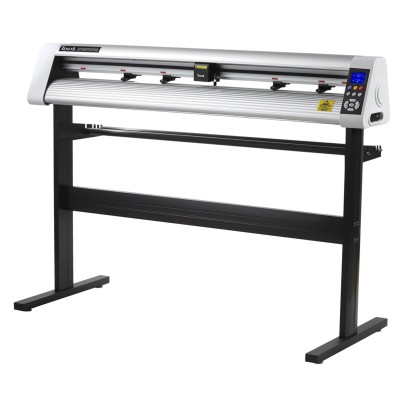 Cutting plotter 160 cm T59AX
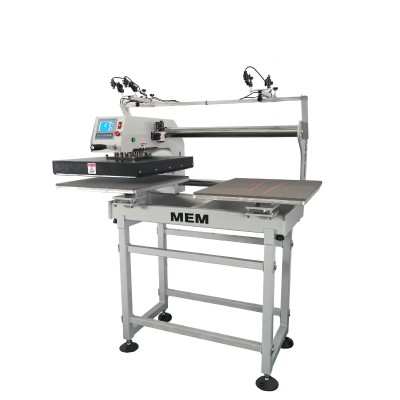 MEM TQ-4050 pneumatic heat press, 2 tables 40×50 cm