How to apply UV-DTF and what you can make with it
Here you will find answers from short videos about UV-DTF: transfer stickers for decorating items. This collection is useful for owners of small print shops and photo studios, covering film handling, decoration examples and raised designs. A separate example shows an acrylic picture made with ordinary self-adhesive film printed on a UV printer. The videos are in Russian.
How do you remove the backing from a UV-DTF sticker without damaging the design?
When peeling off the bottom backing, bend only the backing itself. Keep the top layer with the design flat: the sticker must stay on the transfer film, which holds the design together during transfer.
How do you apply a UV-DTF sticker to an item and remove the film?
Place the sticker on the surface together with the transfer film. Then carefully remove the film without sudden movements.
Which surfaces can you apply UV-DTF foil stickers to?
The video suggests foil stickers for kraft paper bags, glass, wood and decorative card stock. The presenter describes suitable surfaces as rigid or moderately flexible.
How do you make a payment QR code sign using UV-DTF?
In the video, the base is cut with a laser machine, then covered first with yellow film and then with white film. The QR code is printed as a separate UV-DTF sticker. Letters made from gold mirror acrylic and the QR code sticker are attached to the base. The protective film is removed at the end.
How do you make an acrylic picture using ordinary self-adhesive UV-printed film?
This is a separate example using ordinary self-adhesive film, rather than a UV-DTF transfer. The design is printed on clear vinyl film using a roll-fed UV printer. The protective film is removed from the acrylic, and the acrylic is wetted with soapy water. The printed film is applied and bubbles are pushed out with a card. The surface is wetted again with soapy water, white vinyl film is applied, bubbles are removed and excess film is trimmed.
Which items does the video suggest decorating with raised UV-DTF stickers?
The video suggests raised stickers for backpacks and caps where a three-dimensional decoration is wanted. For leather passport or vehicle document covers, the presenter discusses combining DTF printing with raised UV-DTF decoration. This is the presenter's proposed idea, rather than a confirmed result on leather.
Can a UV-DTF design printed with flexible inks crack at a fold?
Yes. The video shows a crack at one fold, which the presenter attributes to strong tension. In another demonstration, the print is unfolded after twisting and crumpling and remains intact.
Why does a dotted UV-DTF design cope better with fabric stretching?
The video explains that gaps between parts of the design allow the fabric fibres to stretch. Long, solid strips can tear when stretched along their length. The design shown consists of separate dots, so it has no such continuous section.
Why is a white edge visible on raised UV-DTF text?
The video explains that the white edge on small letters comes from the height of the white layer: its thickness is visible from the side. To cover this edge with colour, the suggestion is to shrink the outline of the white layer slightly.
What to check before working with a sticker
Our checklist will help you check the item and design before applying a sticker.
- Preparation. Is it easy to separate the chosen sticker from the others? The instructions show it being cut out first.
- Surface. Compare the material of your item with the example you want to reproduce.
- Design. For stretchy fabric, check where the artwork has long, solid sections.
- Small text. Look at the raised letters from the side and assess how visible the white edge is.
Equipment in the catalogue
For comparison, the catalogue includes UV-DTF printers, including models for textiles, and a roll-fed UV printer.
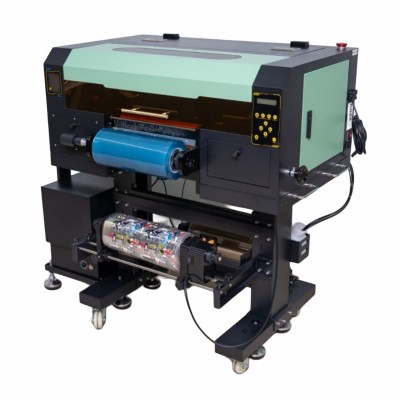 UV DTF printer 30 cm TF230, 2×i1600
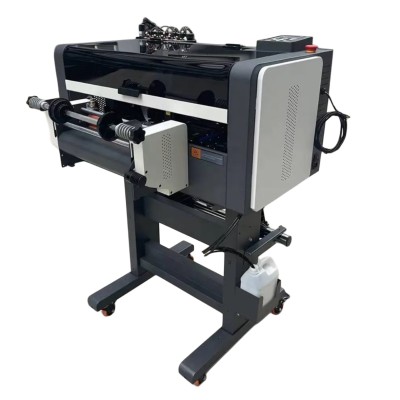 UV DTF printer 30 cm for textiles, 3×i3200
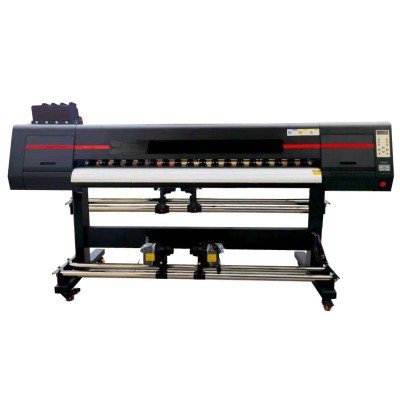 Roll-to-roll UV printer 160 cm 1602UV, 2×i3200