Why a DTF or UV printhead prints badly: 17 reasons
A PrintChina engineer explains why inkjet printheads fail, including those used for DTF – printing onto film for transfer to fabric – and UV printing, which uses ink cured by ultraviolet light. Click a time to play the video from that point. The video is in Russian.
Questions and answers by the minute
0:29 Why does ink stop reaching the head?
The simplest cause is a vacuum in the system. If the ink tank has no air filter and its lid is tight, no air gets in and ink cannot flow along the line, the tubing leading to the head.
0:59 What do dampers have to do with it?
A damper is a small chamber that feeds ink to the head. If it is not primed or air gets into the line, the head starves and nozzles, the holes it prints with, drop out.
1:24 What is a clogged manifold mesh?
The manifold is a plastic part that spreads ink between the channels of the head. Each channel has a mesh inside, and pigment settles on it. Pressure falls and the print gets gaps.
2:15 Why change the filter together with the ink?
The engineer compares it to an oil filter in a car: the ink is new, the deposits are old. Fresh ink washes them into the line and the dampers. The video of 16 November 2024 advises changing the filter at least every six months.
3:06 How do caps and flushing affect the head?
A cap covers the head when it is parked. If its rim is damaged, it lets air in, so cleaning becomes less effective and the head can dry out. Flushing – briefly ejecting ink from the nozzles – also needs to be configured: frequency, duration and number of repetitions.
3:47 Do Epson heads need negative pressure?
Negative pressure is a design where pumps and valves hold the ink and there are no dampers or caps. The engineer believes it harms Epson heads: when parked they stay in open air, and an outer channel of an XP600 may lose its seal. For industrial heads of another type the engineer considers the design suitable.
6:06 Why is rare printing harmful?
When there are few orders and the printer runs once every few days, pigment settles on the manifold mesh and clogs it. The video advises printing more often.
6:45 How can you tell that parking is to blame?
If the caps do not reach the head or press weakly, it dries while parked. First a nozzle or two drop out unnoticed, then they close for good. A similar cause is back pressure, when air goes through the head into the damper and the line.
7:33 Which fluid must not go into the caps?
One made for a different ink. The engineer warns that alcohol turns DTF ink into paste, and into “chewing gum” when warm. Solvent, pigment, DTF and UV inks each need their own fluid.
8:24 Why is a misaligned ribbon cable dangerous?
A ribbon cable is the head's flat cable. After a short circuit it is replaced together with the head and must be inserted exactly. Shifted by one contact, it makes the head heat up and fail after the very first test.
9:25 Can you flush the head with a syringe and a hose?
The video warns that flushing through a hose with a syringe can break the head's seal, distort the ink jets or spill fluid onto the ribbon cable and cause a short circuit. Do not repeat this procedure; contact a service technician. The engineer mentions the printer's built-in pumping, cleaning at set intervals and flushing settings as alternatives.
10:45 What else causes a printhead to fail?
The seventeenth cause is the person at the printer: a cable touched, a drop spilled, a part not tightened. If you are not sure, ask first.
Where to start if the head prints with gaps?
The order below is ours, from simple to complex, using the causes from the video.
- Loosen the lid of the ink tank or check its air filter.
- Look at the dampers: they must hold ink, not air.
- Recall when you last changed the ink filter and the ink itself.
- Check that the caps press properly and their rims are intact.
- If all is well but nozzles vanish while printing, the manifold mesh may be the cause.
What must not be done?
- Pouring alcohol or fluid for other inks into the caps.
- Touching ribbon cables with the power on or inserting them by guess.
- Forcing fluid into the head through a hose with a syringe: the video warns that this can damage the head or cause a short circuit. Do not repeat this procedure; contact a service technician.
When is it time to replace the head?
The video advises replacing the ribbon cable when replacing a head after a short circuit. If you suspect a short circuit or a broken seal, contact a service technician for an inspection. The catalogue has original XP600, i1600 and i3200 heads.
Cleaning helps, but nozzles drop out again after a few metres. Where to look?
There is a separate video of 11 November 2024 (in Russian) about this. If the pressure compensation cartridge, a small tank that evens out ink pressure, sits lower than the printheads, ink flows back into it. The head then draws in air from the cap, and the dampers fill with more and more air as you print. The video advises checking the tubes for air: priming the dampers removes the effect, while the cause has to be fixed separately. Our service team can help check the cartridge position.
Useful for maintenance
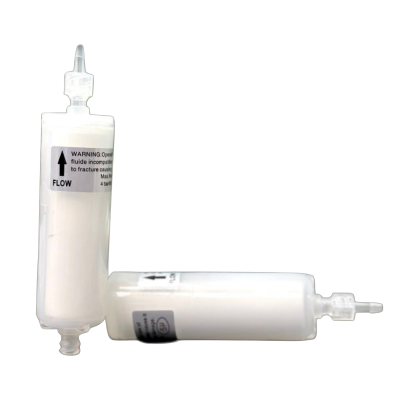 DTF ink filter, 5 micron
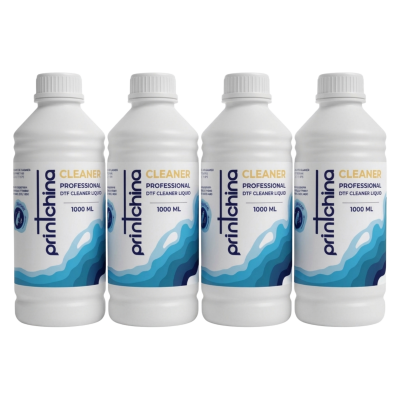 DTF printer cleaning fluid (DTF Cleaner)
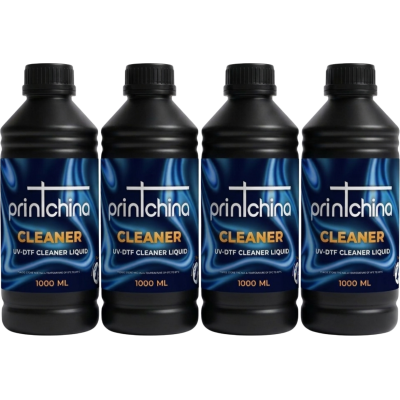 UV-DTF printer cleaning fluid (UV-DTF Cleaner)
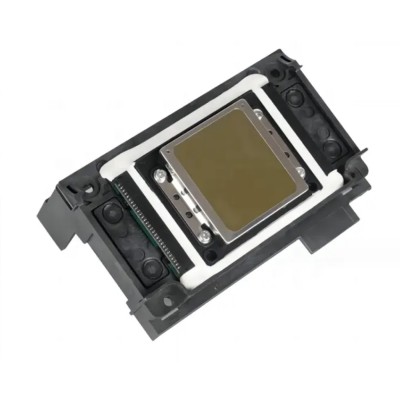 Epson XP600 printhead, genuine
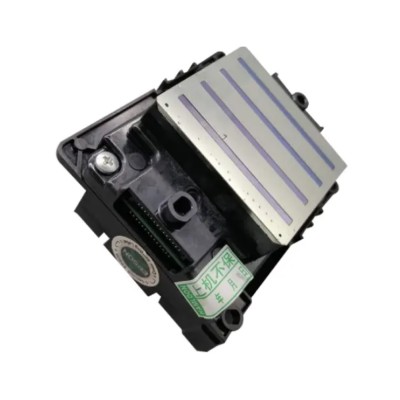 Epson i3200 printhead E1