UV-DTF on textile together with ordinary DTF
Two technologies on one T-shirt: DTF, which transfers an image printed on film onto fabric, provides the flat background. UV-DTF for textiles allows raised details to be printed on film and transferred onto the background, creating an embroidery effect. The video of 17 October 2025 shows preparation, printing and transfer. Click a time to play the video from that point. The video is in Russian.
Questions and answers by the minute
0:00 What has changed since the first tests?
The transfer used to seem too risky for someone else's item. The video says the team has solved the task.
1:19 How is the artwork prepared?
The background stays whole and works as a template for positioning the details. Elements that must be raised are printed separately using UV-DTF.
1:45 Why save the job to a file?
The print program then lets you separately choose how many times white and colour ink are applied, known as passes. In the video, this setting is used to build up the white layer.
3:01 How is the relief made?
In the video, three printheads, the parts that apply ink, build up the white layer. Each makes two passes; the stated setting is 720 by 2400. One flower smeared because the layer was too high. They decided not to transfer it, so the flat flower in the background could later be compared with other, raised flowers.
4:00 How is the background printed?
On the DTF line, equipment that prints an image on film for transfer to fabric, they run a cleaning cycle and test the nozzles, the tiny openings that deliver ink. The job is sent straight to the printer instead of being saved to a separate file. The artwork is rotated horizontally to save film.
5:22 What is done before sticking?
Lint is removed before the image is positioned on the T-shirt. The raised elements are cut out separately so they can then be placed over the DTF background.
6:28 How are raised elements applied?
In the video, the film separates easily from the raised element, and the presenter notes that it is not sticky. The element is positioned on the T-shirt and pressed in a heat press, a device that applies heat and pressure to the image.
7:57 What came out?
The difference is clear: a flat background and raised details. A small shift of one detail is also shown in the video.
9:13 And just an embroidery effect?
In the video, a separate image with an embroidery effect is transferred. For this sample, the stated final press, an additional pressing in the heat press, is 5 seconds. No thread or needles are needed for this effect.
What is needed for such work?
- A DTF line for the background.
- A UV-DTF printer designed for textiles, with UV-DTF ink and film specifically intended for textiles.
- A heat press.
Practise on samples before taking a client's item; see why in transfer details.
Machines and materials
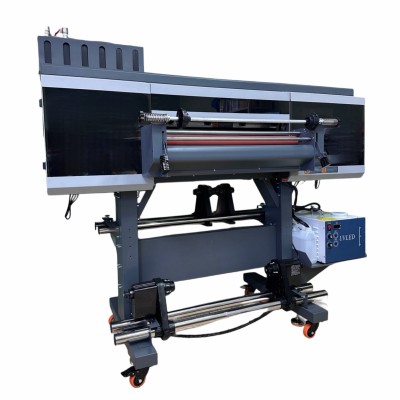 UV DTF printer 60 cm for textiles, 3×i3200
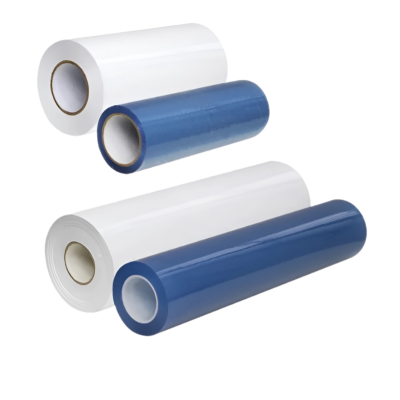 UV DTF film for textiles, A+B kit, 100 m
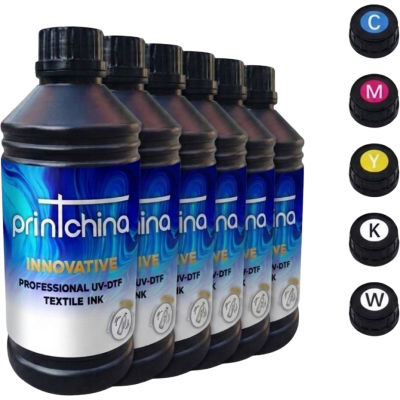 UV-DTF ink for textiles, 1 L
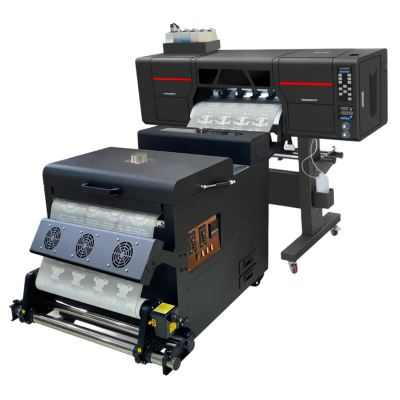 DTF line 60 cm ST-602, 2*i3200
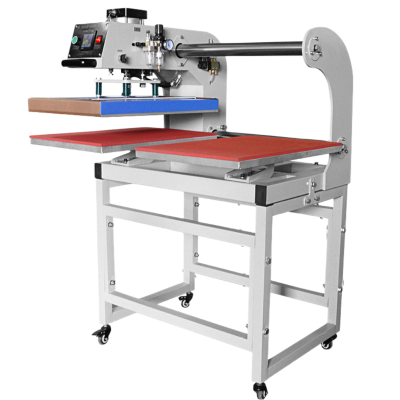 Pneumatic heat press 40×60 cm, 2 tables